There are days at a World Cup when the football is merely functional — three points claimed, a group table shuffled, a manager’s post-match press conference conducted in the airless language of professionalism. And then there are days like June 15, 2026, when the tournament suddenly remembers what it is supposed to be: a stage for the unexpected, for the human, for the kind of drama that you could not plausibly script without being accused of sentimentality. Four matches. Eight goals. Three draws. One young man who couldn’t quite bring himself to celebrate against his father’s homeland. One forty-year-old goalkeeper who came from Portugal’s second division to deny the second-ranked nation on earth. One Egyptian king who turned thirty-four in the most public manner imaginable. And one Uruguayan coach who would very much like everyone to know that he is not, under any circumstances, a model.
Day 5 of the 2026 FIFA World Cup group stage was, by any honest measure, close to the full experience of what football offers us. Let us account for it properly.
Sweden 5–1 Tunisia: Potter’s System Delivers, Ayari’s Heart Tells a Different Story
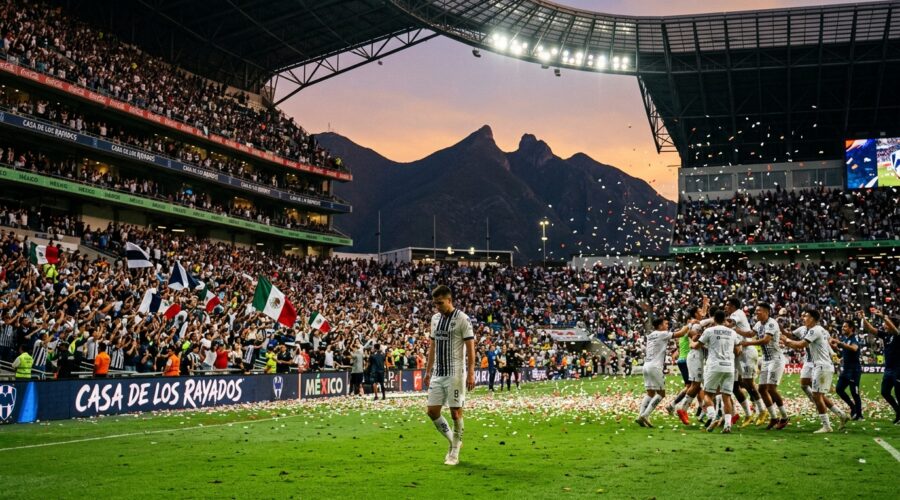
The Estadio BBVA in Monterrey sits beneath the extraordinary silhouette of Cerro de la Silla, a mountain that resembles a saddle from a certain angle and a metaphor for endurance from most others. It was an appropriate backdrop for a match that contained more emotional texture than the scoreline might suggest.
The question going into this game was one that had occupied Swedish football thinking for several months: how do you fit Alexander Isak and Viktor Gyökeres into the same system without one of them disappearing? Graham Potter’s answer, it turned out, was a 5-2-3 that gave both men licence to operate in the channels, supported by a midfield two whose role was essentially to keep the structure intact while the front three played with freedom. It was an elegant solution, arrived at by a manager who earned considerable goodwill in the English game before Sweden decided he was the right man to haul them back onto football’s biggest stage.
Isak was the fulcrum. Brilliant in the seventh minute with a forward’s instinctive movement, superb in the buildup to the third goal when he stripped Skhiri in midfield with the casual authority of a man who simply doesn’t believe opponents can hold the ball near him. By the end he had one goal and three assists, and the performance should settle — at least temporarily — any lingering anxiety about his fitness going into the tournament. Gyökeres, who arrived at this World Cup in the form of a man who had been eating opposing defences as a light snack for most of the previous calendar year, duly got his goal too, burying Isak’s robbery of Skhiri with the sort of composure that suggests he was not unduly troubled by the occasion. They are now only the second Swedish strike partnership to assist one another at a World Cup, a fact that will matter considerably more if they do it against opponents with better defensive organisation than Tunisia.
But the story of the night in Monterrey was Yasin Ayari, and the story of Yasin Ayari was not really about football at all.
The twenty-two-year-old from Brighton scored two long-range screamers — a seventh-minute thunderbolt to open the scoring, and a stoppage-time bookend in the 95th minute that sealed a comprehensive victory — and on both occasions he stood motionless, arms still, while his teammates swarmed around him. His father was born in Tunisia. That is all you need to know, and it is, frankly, everything. There is no manual for how to behave in that moment, playing on the world’s largest stage against a country that contains part of your own history, scoring goals that consign them to defeat. The muted celebration was not a tactical choice. It was a man navigating something for which football gives him no preparation whatsoever.
Tunisia did have their moment. Omar Rekik’s header just before half-time, assisted by Hannibal Mejbri — who looked, for long stretches, like the best player on the pitch in a red shirt — gave them a foothold, however briefly. But Tunisia’s 4-2-3-1 was not built to sustain pressure against Sweden’s width, and the Swedes’ thirteen shots to Tunisia’s six told the story of a match that was comfortable long before it was over.
Sweden lead Group F with three points and a goal difference of plus four. Their next assignment will require considerably more than this.
Spain 0–0 Cape Verde: The Night Football Levelled the Ledger
If you follow football with any regularity, you have sat through matches in which the world’s most technically gifted nations have been thwarted by opponents organised to the point of abstraction — a deep block, a sweeper-keeper, a defensive line that shifts and shuffles and refuses to yield space through any legal means available. You have, on occasion, found it tedious. You have thought: surely this cannot be what the game is for.
You were wrong. The proof was in Atlanta.
Cape Verde — a nation of approximately 600,000 people, ranked sixty-one places below Spain in the FIFA standings, making their first appearance in the history of the World Cup — came to the Mercedes-Benz Stadium and did not merely survive. They competed. They shaped a defensive structure of remarkable discipline under their manager Bubista, absorbing Spain’s possession game with the poise of a team that had prepared not for survival but for a specific kind of victory: the victory of denying one of the great footballing nations the thing they most desperately want.
Spain registered twenty-seven shots. Twenty-seven. That figure equalled the joint-most they have ever produced in a World Cup match without scoring — the previous occasion being a goalless draw against Paraguay in 1998 — and it contains within it a fairly devastating critique of their finishing. Ferrán Torres hit the crossbar. Fabián Ruiz curled an effort wide. Pedri, Lamine Yamal, Nico Williams and Dani Olmo all tried to find the combination that would unlock the door. The door did not open.
The man in possession of the key was Vózinha. He is forty years old. He plays his club football in Portugal’s second division for Chaves. He had, according to The Athletic, very nearly retired before this tournament. He made seven saves — some of them the kind that make the crowd inhale sharply and then release the air very slowly — and at the final whistle was named Player of the Match in what was, by any measure, the night of his life. The oldest man ever to make his World Cup debut, the oldest goalkeeper ever to appear for a nation making its first appearance at the tournament — surpassing the record previously held by Eloy Room of Curaçao. The numbers that describe Vózinha’s career exist in a register so far removed from a goalkeeper denying Spain twenty-seven times in Atlanta that it would take considerable nerve to claim them as belonging to the same sport.
Rodri, Spain’s midfield anchor, offered the diplomatically honest post-match assessment: “The team tried, I think we had good fluidity. It’s about fine-tuning those chances we created, because against a team that sits back so much you’re not going to have many, and you know you have to take them. It’s that simple.” It is, indeed, that simple. Spain, for all their technical excellence, could not do the simple thing. Cape Verde, for all their supposed modesty, could.
Ange Postecoglou, watching on as an ITV pundit, found the right register: “The greatness of sport and football lies in the intangibles. There was something inside those Cape Verde players that wasn’t going to let them yield today.” There was a tearful child in the Cape Verde section of the stands whose image became the day’s most circulated symbol of what football can still, occasionally and unexpectedly, produce.
Belgium 1–1 Egypt: A King’s Birthday and an Almost-History
Mohamed Salah turned thirty-four on June 15, 2026. Football, always a more theatrical companion than it lets on, arranged for him to mark the occasion at Lumen Field in Seattle with a World Cup assist — and for that assist to carry a historic footnote: the first African player to record a World Cup goal involvement on his birthday.
Emam Ashour’s nineteenth-minute opener, set up by Salah with the kind of pass that makes technical limitations feel irrelevant, was the Egyptian’s first international goal, arrived at in the most pressurised environment imaginable. Egypt led with composure, with their goalkeeper Oufa Shobeir handling the Belgian pressure with a competence that suggested this group stage might yet have surprises to offer. Hossam Hassan’s 4-2-3-1 — with Mohanad Lasheen and Marwan Attia screening the defence, Trezeguet, Emam Ashour and Salah operating as the attacking three behind a lone striker, and Omar Marmoush leading the line — ran on counter-attacks with the precision of a team that knows it cannot afford to go toe-to-toe with Belgium for ninety minutes and survive.
For nearly fifty minutes, Egypt held. They were within touching distance of becoming the first Egyptian side to win a World Cup match — a fact that made their eventual equaliser all the more painful in the manner of its arrival. Because when Belgium did score, in the sixty-sixth minute, it was not Kevin De Bruyne slipping a defence-splitting ball through a crowded Egyptian penalty area. It was a Mohamed Hany own goal, forced by Romelu Lukaku’s ceaseless, suffocating pressure — the Belgian striker’s sheer physical presence redirecting a clearance into the wrong net. It is an occupational hazard of facing Lukaku that the ball sometimes ends up in a place you did not intend it to be, and Hany became the day’s unfortunate contributor to the own goal column.
At the final whistle, Salah raised a clenched fist. Not quite the birthday gift he wanted, but Egypt remain in the tournament, a point on the board, and their wait for a first-ever World Cup victory extends — for now — only to the next match rather than the end of days.
Saudi Arabia 1–1 Uruguay: Al Owais Stands Between Bielsa and Three Points
There is a photograph circulating from before this tournament began: the official FIFA squad photo for Uruguay, and somewhere in the middle of it, Marcelo Bielsa — seventy years old, the most obsessively analytical football manager alive — is staring at the ground with the expression of a man who has been asked to do something that affronts his deepest professional convictions. When asked about it, Bielsa reportedly offered the explanation that he is not a model. He is correct. He is a football coach. The distinction, in his view, apparently requires no further elaboration.
His Uruguay side, at Hard Rock Stadium in Miami, played like a team that had been very thoroughly prepared for everything except Mohammed Al Owais.
Saudi Arabia, operating with thirty-three percent possession in a defensive shape reminiscent of their famous 2022 night against Argentina, took the lead through Abdulelah Al Amri on forty-one minutes — the goal arriving from a corner kick, with Musab Al-Juwayar delivering to the back post, Mohamed Kanno heading it goalward, Fernando Muslera parrying the ball, and Al Amri striking the loose ball into the net from close range. It was, in the context of how the match played out, an act of either calculation or mild theft, depending on your perspective. Saudi Arabia had seven shots to Uruguay’s twenty-seven. Their goalkeeper had a rather fuller evening.
Al Owais — the Saudi number one — produced a performance of the sort that defies fair statistical accounting. A world-class save from Federico Valverde. Multiple interventions to deny Darwin Núñez. A stoppage-time stop from Nicolás De La Cruz when Uruguay had fully committed to finding a winner. Manuel Ugarte hit the woodwork with a thunderbolt. The Uruguayan midfield, which contains Valverde, Ugarte, De La Cruz and Rodrigo Bentancur, is among the best balanced and most technically accomplished in the tournament, and on a different night with a different goalkeeper in opposition, they win this match comfortably.
Maximiliano Araújo’s eightieth-minute equaliser — a composed finish from a rebound after Federico Viñas’s header was parried — secured the point, and Uruguay’s Garra Charrúa, that flinty fighting spirit that has defined their football for a century, was evident in the refusal to accept defeat. But three points were there to be taken, and Al Owais, with something like quiet brilliance, made sure they were not.
The Table That Makes Everyone Nervous: Group H After Matchday One
When the Group H draw was made, the assumption was that Spain would be through comfortably, with Uruguay competing for second place, and Cape Verde and Saudi Arabia fighting for a third-place route into the knockout rounds. That assumption lasted precisely one matchday before being comprehensively dismantled.
Spain: one point. Cape Verde: one point. Uruguay: one point. Saudi Arabia: one point. Every team level, every permutation still possible, every manager returning to their hotel with the particular anxiety of someone who had expected clarity and received ambiguity instead. It is the kind of group that should produce extraordinary football in the remaining matchdays — or, if the defences hold, extraordinary goalless theatre. Either way, it will be watched.
The Golden Boot and What It Tells Us
With Yasin Ayari’s brace joining the board, the early Golden Boot standings show three players on two goals: Ayari alongside Folarin Balogun of the USA and Kai Havertz of Germany — two representing European powerhouses and one being a twenty-two-year-old from Brighton who celebrates goals with his arms by his sides. The leaderboard will shift considerably in the days ahead, but Ayari’s name is on it now, which is not the kind of thing that feels routine when you consider what June 15 cost him to achieve it.
What Comes Next
June 16 brings Iran against New Zealand in Group G — a match that will begin to crystallise whether Egypt’s early point is a platform or a consolation. France face Senegal in Group I, a fixture whose historical weight requires no annotation for anyone who was watching in 2002. Iraq meet Norway in the same group, which is precisely the kind of match this expanded tournament exists to produce.
Then on June 17, the heavyweights begin to stir: Argentina against Algeria, England against Croatia, Portugal against Congo DR. The familiar names, the familiar expectations, the familiar possibility that some of them will be disappointed.
But for now, the memory of Day 5 is sufficient. An old goalkeeper from the Portuguese second division keeping out the second-best nation on earth. A young man standing still amid celebrating teammates because he knew, somewhere in the part of himself that predates football, that this was not the moment to be happy. A birthday assist in Seattle. A coach in Miami who remains resolutely uninterested in posing for photographs.
The World Cup is five days old. It is already, against all reasonable expectation, behaving like itself.