On the night of August 30, 2026, Angel Reese grabbed a rebound in the fourth quarter against the Minnesota Lynx, logged her 29th double-double of the season, and in doing so broke a WNBA record that had stood for three years. Hours later, the league went dark. No tip-offs. No box scores. No standings movement. For the first time since the All-Star break, the best basketball league in the world simply stopped — and for the next two and a half weeks, the sport’s center of gravity shifted roughly 4,700 miles east, to Berlin, Germany.
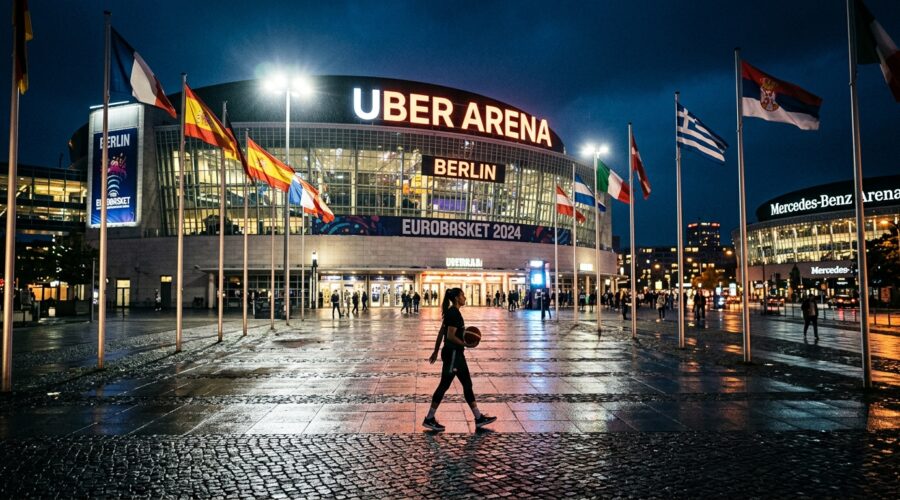
The 2026 FIBA Women’s Basketball World Cup, the 20th edition of the quadrennial championship, opens September 4 at the Uber Arena in Friedrichshain. It runs through September 13. And whatever you think about the timing — and plenty of people have very strong thoughts about it — there is no denying what this tournament is: the most talent-dense, narratively rich, globally compelling women’s basketball event in memory. Sixteen nations. Fifty-one WNBA players. One gold medal. And a road that leads directly to the 2028 Los Angeles Olympics.
This is not a consolation prize for fans enduring a WNBA withdrawal. This is the main event wearing a different jersey.
The Last Night Before the Lights Went Out
The final pre-break slate on August 30 delivered exactly the kind of chaos the standings needed. Atlanta outpunched Minnesota 89-81, snapping the Lynx’s eight-game road winning streak and vaulting the Dream into a tie with Indiana at 26-14 for the top spot in the East. The Golden State Valkyries handled Portland Fire 86-69 to stay right on Minnesota’s heels at 29-11 in the West. Dallas drubbed Connecticut 97-71 to hold their fourth-place cushion. The LA Sparks, in one of their few bright moments of a lost season, took down Seattle 90-74.
Then the players who were bound for Berlin boarded flights, and the league held its collective breath.
The standings entering the break are a drama unto themselves. In the West, Minnesota (31-9) holds a two-game lead over Golden State (29-11), with Las Vegas (27-13) in third and Dallas (24-16) in fourth. The East is even tighter: Atlanta and Indiana are deadlocked at 26-14, while New York and Washington are knotted at 24-16 for the third and fourth seeds. There is exactly one week of regular season remaining after the break — September 17 through 24 — before the playoffs begin on September 27. Every game will count in ways that feel almost unfair given how few of them remain.
But those questions are on pause. Berlin is calling.
The Tournament: What You Need to Know
Two venues host the action. Max-Schmeling-Halle, the 9,500-seat arena in Prenzlauer Berg named after Germany’s legendary heavyweight boxing world champion, handles Groups A and B in the preliminary round. There is a layered resonance to that choice: the same building hosted the final round of the 1998 FIBA Women’s World Cup, the last time Germany staged this tournament. History does not repeat itself, but apparently it does return to the same gym.
All knockout games — quarterfinals, semifinals, the bronze medal game, and the gold medal final — move to the Uber Arena in Friedrichshain, a venue along the Spree River that seats up to 14,500 in basketball configuration and has hosted European handball championships and three EuroLeague Final Fours. It is a cathedral of international sport, and on September 13, it will host the biggest game in women’s basketball this side of an Olympic final.
The format is straightforward: 16 teams divided into four groups of four, each team playing three group-stage games. Group winners advance directly to the quarterfinals. Second and third place finishers enter a qualification round to compete for the remaining four quarterfinal spots. Last-place finishers go home early. The bracket is clean. The stakes are obvious.
Group assignments matter here. The United States drew Group D at the Uber Arena alongside China, Italy, and Czechia — three games that, on paper, should produce three wins before the real tournament begins. France, widely regarded as the most credible threat to American gold, landed in Group B alongside Nigeria, Hungary, and South Korea. Belgium, ranked fifth in the world, drew Group C alongside Australia. Those two could meet before the final, which would be a genuine loss for the gold medal game’s drama.
Team USA: The Favorites, the Absences, and the Story Nobody Expected
Let’s start with what the Americans are missing, because it matters more than usual. A’ja Wilson — four-time WNBA MVP, the current league scoring leader at 26.0 points per game, the player many regard as the best in the world — will not be in Berlin. Neither will Kelsey Plum, a five-time All-Star who was originally named to the roster. Both withdrew for health reasons. Their replacements are Sonia Citron and Kiki Iriafen of the Washington Mystics, two players in the early stages of their professional careers who will now make their World Cup debuts on the largest stage of their lives.
Head coach Kara Lawson — appointed by USA Basketball managing director Sue Bird in September 2025 and making her first major appearance in this role before also leading the team at the 2028 Los Angeles Olympics — addressed the absences directly before the tournament. “We wish them both a speedy recovery with what they’re dealing with,” Lawson said, “but we don’t have time to be worried about who’s not here. We’ve got to really focus on ourselves and how we’re going to develop our chemistry in the short lead-up and trying to win.”
Her broader assessment of the tournament was notably direct. “I think there’s no question that the world is improving at a rapid rate,” Lawson said. “The depth of these rosters is really strong, and I think it’s going to be the most difficult World Cup to win that we’ve had.”
That is not false modesty. It is accurate scouting.
Still, the roster Lawson has assembled is extraordinary by any reasonable measure. Caitlin Clark comes in averaging 22.5 points and 8.4 assists per game for Indiana, in the midst of what many consider the most statistically complete professional season of her career. Paige Bueckers is shooting 50.6 percent from the field for Dallas while averaging 20.5 points. Breanna Stewart is at 20.4 points and 8.1 rebounds per game for New York. Angel Reese — the record-breaking rebounder — is averaging 12.4 boards per contest for Atlanta. Kahleah Copper, Jackie Young, Aliyah Boston, Napheesa Collier, Chelsea Gray, Rhyne Howard, Citron, and Iriafen round out a 12-player group that includes nine players who have never appeared in a World Cup.
That youth and inexperience is a legitimate variable. It is also, for a neutral observer, a reason to watch every minute.
USA opens September 4 against China at 8:15 a.m. Eastern Time, the six-hour Berlin time difference making early mornings a requirement for dedicated American viewers. Italy follows on September 6, Czechia on September 7. The Americans are 8-0 all-time against China at the World Cup. The group stage should be a tune-up. What comes after it is the main course.
The Real Threat Wears Blue, White, and Red
On August 11, 2024, in Paris, Gabby Williams drove the length of the floor in the final seconds of the Olympic gold medal game and released a shot at the buzzer that went in — but her foot was on the three-point line, making it count as only a 2-pointer. The basket brought France within one but was not enough to tie the game or force overtime. The United States survived, 67-66, to claim its eighth consecutive Olympic gold. France went home with silver and something arguably more useful: proof.
Two years later, France arrives in Berlin as the second-ranked team in the world and the betting public’s most credible challenger to the Americans at odds of +800 to +900. Their roster is loaded with WNBA talent. Gabby Williams of the Golden State Valkyries, one of the Defensive Player of the Year candidates in the WNBA this season, anchors the French attack. Marine Johannès of the New York Liberty, Janelle Salaün — who just broke the WNBA’s all-time record for points scored by a reserve player in a single season — and Dominique Malonga of the Seattle Storm round out a group of eight WNBA players that represents the most of any non-American team in Berlin.
Belgium (+1000-+1100) brings Emma Meesseman and Julie Allemand, among others, and has been building toward a serious title run for years. Australia (+1600), coached by Sandy Brondello — who also serves as the Toronto Tempo’s head coach in the WNBA — features Ezi Magbegor and Jade Melbourne but lost in the Paris Olympic semifinals to France. China (+2200), featuring 6-foot-11 center Han Xu of the New York Liberty and 7-foot-3 teenager Zhang Ziyu, offers a unique challenge that no team on earth can fully replicate: they are bigger than everyone, and in FIBA basketball, that is a different kind of problem than it is in the WNBA.
The betting lines list Team USA at -400 to -500. That is the number of a dynasty. It is also the number of a team that nearly lost to France in Paris and is now heading into Berlin without its best player.
The Rules Are Different Here — and That Matters
One aspect of this tournament that casual fans consistently underestimate is how significantly FIBA basketball diverges from the WNBA product. The three-point line is the same distance in both — 22 feet, 1.75 inches, matching the international FIBA standard — so the arc itself is not a variable. What changes is everything else around it. For Clark and Bueckers, the familiar range they have mastered all season translates directly to the international game.
FIBA players are disqualified after five personal fouls rather than six, which compresses foul management strategy throughout the game and penalizes aggressive defenders earlier. FIBA’s goaltending rules are more permissive than those in the NBA or NCAA: while goaltending violations do apply to shots on their downward trajectory and to balls that have touched the backboard above ring level, once the ball makes contact with the rim, any player may legally touch it. That distinction opens up entire categories of defensive schemes — particularly relevant against China’s towering interior players. The court itself is fractionally smaller, which effectively reduces spacing and favors physical, interior-oriented basketball.
Players transitioning from the WNBA to FIBA competition are not just changing uniforms. They are playing a meaningfully different version of the sport. Teams that adapt fastest in the compressed group stage will arrive at the knockout rounds with an edge that statistics alone cannot capture.
The ball is different too. The WNBA uses a Wilson 8-panel ball. FIBA uses a Molten 12-panel. It sounds trivial. Ask any elite shooter who has picked up the wrong ball in warmups whether it actually is.
The Schedule Debate: A Real Wound With a Promised Remedy
Not everyone is celebrating this tournament. Some of the most prominent voices in women’s basketball have been remarkably candid about the cost of hosting a global championship in the middle of the WNBA’s playoff push.
Breanna Stewart said it plainly: “In 2026, it’s supposed to be in September, and that means people are either going to leave their teams right before the playoff push. It’s putting the players in a tough spot because you want to represent your country, but also you want to fight for a playoff spot or a championship run with your team that you’ve been playing with all year.”
Sandy Brondello, who is navigating the unique situation of coaching Australia at this World Cup while also leading the Toronto Tempo — a franchise that finished 11-29 this season and had no representatives in Berlin — was equally blunt. “It’s just unfortunate that it’s during the year. It shouldn’t be.”
The structural reality is this: teams like Indiana, Las Vegas, Atlanta, and Minnesota lose multiple key players simultaneously during the most consequential stretch of the regular season. The Indiana Fever send both Caitlin Clark and Aliyah Boston to Berlin while fighting for playoff positioning. The impact is not hypothetical. It is arithmetic.
The silver lining that coaches like Stephanie White of Indiana have noted — that non-World Cup players receive a rare mental and physical reset before the playoff push — is real. It is also, to use a charitable description, a silver lining on a cloud that should not exist.
Here, at least, is the resolution: FIBA has already announced that the 2030 Women’s World Cup will move to a November 26 through December 8 window, completely outside the WNBA calendar. The conflict disappears. The debate ends. But in 2026, the players are the ones absorbing the cost of the scheduling compromise, and they know it.
How to Watch — and Why You Should
TNT and truTV will broadcast 17 of the tournament’s 36 games, including every Team USA contest. HBO Max will stream all 36 games live. The studio team features host Lauren Jbara alongside analysts Renee Montgomery, Tina Charles, and Candace Parker — four figures who understand this game at a molecular level. Brendan Glasheen handles play-by-play with Sarah Kustok providing color commentary and Allie LaForce reporting from the sideline.
Early-session games tip off around 9:30 a.m. Eastern, with later sessions running through approximately 12:30 p.m. Eastern. Set the alarm. Make the coffee strong.
What Comes After Berlin
The WNBA resumes September 17, plays its final regular season games through September 24, and opens the 2026 playoffs on September 27. Beginning with the 2025 season, the WNBA Finals became a best-of-seven series for the first time in league history — a format that continues into 2026, with the Finals running from October 16 through October 30 on NBC, Peacock, NBCSN, ESPN, and USA Network.
Think about what that means in practice. A player who wins gold in Berlin on September 13 boards a plane, lands in the United States, and has four days before her WNBA team needs her back for the final push to secure playoff seeding. She then plays a first-round best-of-three series, a semifinal best-of-five series, and potentially seven Finals games. The champion of this WNBA season will have played, by any measure, the most demanding professional basketball schedule in women’s sports history.
The standings entering the break — Minnesota atop the West, Atlanta and Indiana deadlocked in the East, four teams separated by two games in a race for conference positioning — ensure that September 17 will feel like a second opening day. Only with playoff implications on every possession.
The Larger Picture
Consider what the 2026 FIBA Women’s World Cup actually represents beneath the surface of schedules and seedings and betting odds. Fifty-one WNBA players, drawn from 13 of the league’s 15 franchises, will represent 15 different countries in a single tournament. The New York Liberty alone sends seven players to Berlin, and those seven players will wear six different national team uniforms — Pauline Astier and Marine Johannès both suit up for France. They will compete against each other. They will compete against their teammates. And then they will come home and try to win a championship together.
The world has caught up. Kara Lawson is not wrong about that. France lost to the United States by a single point in the Olympic final. Belgium reached an Olympic medal for the first time. Germany, playing at home in front of what promises to be a deeply partisan crowd at Max-Schmeling-Halle, will be playing with the kind of national-pride energy that does not show up in any statistical model — even if the team faces uncertainty up front, with Satou Sabally sidelined by concussion recovery and both Leonie Fiebich and Nyara Sabally carrying injuries that have raised questions about their availability.
The gold medal winner earns an automatic berth in the 2028 Los Angeles Olympics, which adds a stakes-within-stakes dimension that makes every elimination round game feel like a World Cup final in miniature.
The WNBA will return. The playoff race will resume. The best-of-seven Finals will be played. But before any of that happens, the greatest women’s basketball players on earth will gather in Berlin under the banner of #WeOwnTheGame and play for the biggest prize in the sport.
That is not an interruption. That is the point.