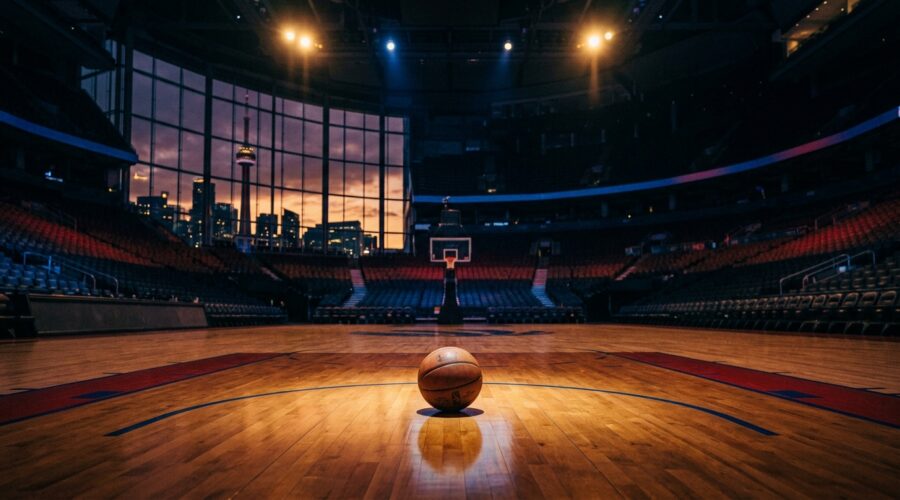
Let’s start with the number that broke the internet on September 2, 2026: $30 million. That is the largest fine in NBA history. Not the largest fine for a player. The largest fine for anyone, ever, in the history of professional basketball. And it was just the opening line of a punishment so catastrophic, so historically unprecedented, that Commissioner Adam Silver had to call it a “flagrant” institutional failure with a straight face — while the wealthiest owner in professional sports quietly prepared to eat the biggest L in the sport’s 80-year history.
This is the story of how the Los Angeles Clippers turned a $375 million investment in Kawhi Leonard into a franchise-altering disaster. How a jersey-patch sponsor named Aspiration — whose co-founder is now serving 14 years in federal prison — sat at the center of the most complex salary cap circumvention scheme the NBA has ever seen. And how, at the very end of this sprawling, years-long saga, Kawhi Leonard somehow walked away with a fine smaller than most mid-tier NBA salaries, got traded to the Toronto Raptors, and is now poised to compete for an Eastern Conference Finals appearance.
Seven years after he left Toronto in the dead of night after the greatest single-player playoff run since Michael Jordan, Kawhi is back. And the wreckage he left behind in Los Angeles is going to take a decade to clean up.
The Aspiration Scheme: A $28 Million Deal for Doing Absolutely Nothing
The story broke September 3, 2025, when Pablo Torre published what may be the most consequential piece of NBA investigative journalism since the Joe Smith scandal of 2000. Torre had obtained over 3,000 pages of internal documents — emails, contracts, notes, meeting records — that revealed a breathtaking arrangement between the Clippers and Aspiration Fund Adviser LLC, a green banking company that was also, conveniently, the team’s jersey-patch sponsor.
The deal, as Torre reported it: Leonard would receive $28 million from Aspiration in exchange for an endorsement arrangement that required, essentially, nothing. One former Aspiration employee put it bluntly on record: “It was 1,000% a way to circumvent the salary cap.”
This was not a gray area. This was not a creative interpretation of the CBA. This was the Clippers steering a corporate partner — one with direct business ties to the franchise — into a fake endorsement deal specifically designed to funnel extra cash to their franchise player, completely outside the bounds of his basketball contract. Four corporate partners were implicated in total: Aspiration, Boingo Wireless, Daktronics, and Lockton Insurance.
The roots of this scheme trace back further than 2025, though. According to notes kept by Clippers President of Basketball Operations Lawrence Frank — notes that investigators later obtained — Dennis Robertson, Leonard’s uncle and business manager, pressured Clippers executives as far back as April 2020 to secure an additional $10 million per year in off-court income for his client. Robertson allegedly complained that Gillian Zucker “was making introductions for bulls— deals” and demanded more. And instead of reporting that demand to the league, as the CBA requires, Clippers executives accommodated it.
That is where the liability begins. The moment the organization chose accommodation over compliance, the clock started ticking on the largest punishment in NBA history.
The Penalties: Unprecedented, Unavoidable, and Absolutely Devastating
The Wachtell, Lipton, Rosen and Katz report dropped on September 2, 2026, and the league’s response was surgical in its severity. Let’s break it down position by position:
- The Franchise: $30 million fine — four times the maximum allowable penalty, stacked consecutively. Forfeiture of five consecutive first-round picks: 2029, 2030, 2031, 2032, and 2033. A five-year compliance monitoring program.
- Steve Ballmer (Owner): One-year suspension from all league and team activities. The NBA found he personally approved the Aspiration business deal knowing it was preconditioned on the company entering a Leonard endorsement arrangement.
- Gillian Zucker (President of Business Operations): One-year suspension without pay. The report called her “primarily and directly culpable” for the impermissible endorsement arrangements — and she compounded her situation by providing false and misleading statements to investigators.
- Lawrence Frank (President of Basketball Operations): Six-month suspension without pay. His offense extended beyond the endorsement deals — he approved impermissible personal expenses for Leonard, including private jets and family travel.
- Dennis Robertson: Five-year ban from conducting business with any NBA team or affiliate.
- Kawhi Leonard: $700,000 fine. No suspension. No voided contract.
That last bullet point is the one that will generate debate for years. Kawhi Leonard allegedly received millions of dollars in improper benefits — with approximately $7 million of the $28 million Aspiration deal still unpaid when the company collapsed — and his penalty was $700,000 and a ticket back to Toronto. The NBA’s reasoning was that the Clippers were the architects and enforcers of the scheme; Leonard was a beneficiary, not the orchestrator. Whether you find that reasoning satisfying probably depends on which team you root for.
Commissioner Adam Silver, in his public statement, called the violations “deeply disappointing,” a “flagrant” example of misconduct, and evidence of “institutional and leadership failures” at the highest level of the organization. He was not wrong.
The Historical Precedent — and Why the Clippers Shattered It
The closest historical parallel to this scandal is the Minnesota Timberwolves’ Joe Smith case from October 2000. Commissioner David Stern hit Minnesota with what was then considered the harshest punishment in NBA history: a $3.5 million fine and the forfeiture of five consecutive first-round picks (2001–2005), after the franchise was found to have entered into a secret agreement with Smith that manipulated free agency rules and circumvented the salary cap.
The Clippers’ punishment makes that look like a parking ticket.
The fine alone — $30 million versus $3.5 million — is nearly nine times larger, even before adjusting for inflation. The Timberwolves lost five picks in a world where the internet was still loading on dial-up. The Clippers are losing five picks (2029–2033) in an era where those assets are the lifeblood of modern roster construction. And critically, the Timberwolves did not also have the owner suspended, two team presidents suspended, a player’s representative banned, and a federal criminal case running parallel to the NBA investigation.
The NBA also explicitly noted that the Clippers were prior offenders of salary cap circumvention rules. That aggravating factor — combined with the sheer scope of the scheme across four corporate partners — is what pushed the penalty from historic to historically devastating.
And then there was the Pablo Torre factor: on August 7, 2026, Torre published a second report alleging Leonard had received millions from Daktronics, the scoreboard manufacturer, with no visible endorsement work performed. The SEC opened its own investigation into Daktronics. The Wachtell Lipton report itself warned that “more information will likely surface over time.” This saga is not over.
The Clippers’ Response: From “Witch Hunt” to “We Accept”
On September 2, after the penalties were announced, the Clippers went full scorched-earth. They called the investigation a “witch hunt.” Ballmer’s attorney, David Kelley, sent a letter to Adam Silver accusing the league of bias, denying due process, and claiming the penalties caused “irreparable” reputational damage. The organization announced it would “vigorously challenge” the findings.
There was one problem with that strategy: the NBA had already secured agreement from both the league and the NBPA that the penalties were “final and binding on all parties.” The primary arbitration avenue the Clippers had hoped to exploit was already closed. ESPN’s Brian Windhorst put it with characteristic bluntness: the Clippers needed to “take this L and move on.”
Twelve days later, on September 14, Steve Ballmer backed down. He accepted the punishment, issued a formal apology, and signed off on the Leonard trade. No further contest. No appeals. The wealthiest owner in professional sports, a man whose net worth is estimated at well over $126 billion, absorbed the largest fine and penalty package in NBA history and moved on.
The Ledger: Seven Years, $575 Million, Zero Conference Finals
Before we get to the part where Kawhi comes home, let’s spend a moment auditing the full catastrophe that was the Clippers’ Kawhi Leonard era. Because the numbers are staggering in a way that almost defies comprehension.
- ~$375 million in basketball salary paid to Leonard across seven seasons
- ~$200 million paid to Paul George, who arrived as a Leonard package deal
- 5 first-round picks + 2 pick swaps surrendered to Oklahoma City for George — picks that became Shai Gilgeous-Alexander (back-to-back MVP), Jalen Williams (All-NBA Third Team), and the core of the 2025 NBA Champion Oklahoma City Thunder
- 3 playoff series wins across seven seasons
- 0 conference finals appearances
- 1 entire lost season — Leonard played zero games in 2021–22 recovering from an ACL tear
- 37 games played in 2024–25 — the second-to-last year of his tenure
- $30 million fine + 5 more first-round picks forfeited as the scandal’s closing act
CBS Sports concluded that the Leonard signing “now rivals the Luka Dončić trade as the worst deal in NBA history” from the Clippers’ perspective. That is a remarkable sentence. Luka Dončić was traded from Dallas to the Los Angeles Lakers — with the Mavericks receiving Anthony Davis, Max Christie, and a 2029 first-round pick in return, via a three-team deal that also involved the Utah Jazz — and even that franchise-reshaping transaction is viewed as less catastrophic than what the Clippers did. The Clippers spent seven years, a franchise-defining fortune, and now the next five years of draft capital chasing a championship they never reached — and then got fined a record $30 million as a postscript.
As things stand for 2026–27, only 42% of the Clippers’ minutes from last season came from players still under contract — the lowest continuity rate in the entire league. Their best player is arguably Darius Garland, acquired from Cleveland in the James Harden trade at the deadline. Yahoo Sports projects them to win between 35 and 39 games. They selected guard Keaton Wagler 5th overall in the 2026 Draft. They are, in the most clinical sense, a team that is starting over.
Kawhi Leonard at 35: Still Doing Things No One Else Has Ever Done
In the middle of all this chaos, Kawhi Leonard put together the best offensive season of his career. Not his best season as a young player. Not his best season before the injury. The best offensive season of his entire career.
In 2025–26, Leonard averaged 27.9 points per game — a career high — on 50.5% from the field, 38.7% from three, and 89.2% from the free throw line. He added 6.4 rebounds, 3.6 assists, and 1.9 steals across 65 games. He tied the Clippers franchise record with 55 points against the Pistons. He earned his 7th All-Star selection, his 7th All-NBA honor (Second Team), and finished 7th in MVP voting.
He is the first player in NBA history to average a career-high in scoring in his 14th season. Let that sink in. At an age when most wings are declining or retired, Kawhi Leonard was averaging the best offensive numbers of his life. The efficiency was elite. The defense was still there — he led all qualified players (500-plus minutes) in steals-plus-blocks to personal foul ratio, committing only 78 personal fouls in 2,085 minutes. His win shares per 48 minutes (0.212) dwarfed Brandon Ingram’s (0.084) and even Scottie Barnes’s (0.140).
In his last game as a Clipper — a 126–121 play-in loss to the Golden State Warriors — he played 40 minutes and posted 21 points, 7 rebounds, and 3 assists. The Clippers finished 42-40, the No. 9 seed in the West. It was a quietly devastating final chapter: a career-best regular season followed by a play-in elimination, and then a trade that had already been agreed to nine months earlier.
The Trade Limbo: Kyle Lowry’s Retirement and a Front-Row Seat at OVO
The trade itself was announced by Shams Charania on June 30, 2026 — but it was not official for over two and a half months. On July 9, the NBA informed the Raptors that if they finalized the trade immediately, they would assume all investigative risk. Toronto decided to wait.
What followed was one of the most unusual stretches of limbo in NBA trade history. On July 7 — two days before the formal hold was announced — Leonard attended Kyle Lowry’s retirement ceremony at OVO Athletic Centre, sitting in the front row. A man being traded to the Raptors, attending a ceremony for one of the Raptors’ greatest players, weeks before the trade was officially on hold. The symbolism was overwhelming.
Throughout the summer, Leonard’s camp maintained that he had “no knowledge of any intent on anyone’s part to circumvent the salary cap.” He fired Dennis Robertson in June 2026 and replaced him with agent Harrison Gaines. His post-trade statement, delivered through Gaines, was characteristically measured: “For 15 years, my priority has been giving everything to my family, the game, and those I share the court with. As I return to Toronto, I am focused on what I can control, closing this chapter, and moving forward with a clean slate.”
On September 14, the trade was finalized. On September 15, the Toronto Raptors made it official. Their statement: “Kawhi Leonard is back. #WeTheNorth.”
Four words and a hashtag. Seven years of waiting, one championship banner, one franchise-defining departure, one federal criminal case, and one $30 million fine later — Kawhi Leonard was a Raptor again.
What Toronto Actually Got: A Legitimate Contender
Let’s talk about what this trade means for the Raptors, because it is genuinely exciting. The package they gave up was real — Brandon Ingram at $40 million per year averaged 21.5 points per game last season, Gradey Dick is a legitimate young piece, and two unprotected first-round picks in 2031 and 2033 are meaningful assets. The financial mechanics were precise: Ingram ($40M) plus Dick ($7.1M) equals $47.1 million, multiplied by the 125% expanded trade exception cap, plus the $250,000 kicker, gives you a ~$59.2 million threshold — enough to absorb Leonard’s $50.3 million salary with room to spare.
The projected 2026–27 starting five looks like this: Immanuel Quickley at point guard, RJ Barrett at shooting guard, Kawhi Leonard at small forward, Scottie Barnes at power forward, and Jakob Poeltl at center, with Collin Murray-Boyles coming off the bench as a Sixth Man of the Year candidate.
The Raptors finished 5th in defensive rating in 2025–26. Adding Leonard — who is arguably still the most impactful perimeter defender in the league on a per-minute basis — pushes them to the very top of that conversation. Their weakness last season was opponent free throw rate; they ranked 23rd in the league. Leonard’s ability to defend without fouling directly addresses that problem. He is the solution to a specific, diagnosable flaw in an already good defense.
Offensively, the pairing of Leonard and Scottie Barnes creates something genuinely novel. Leonard’s statement about the dynamic was telling: “I’m not here to take over anything. I want to help your vision, help Scottie, whatever. I just want to win. If it’s Scottie’s team, it’s his team. I just want to do whatever it takes.”
That is the right answer. Barnes is a two-time All-Star with a 0.140 win shares per 48 — excellent. Leonard, at 0.212, makes him better. The question is whether Leonard’s health holds. He played 65 games in 2025–26, which is the most he has played since 2018–19 with Toronto. At 35, on the final year of his contract, every game matters.
On the extension math: Leonard can sign immediately for up to $123.7 million over two years (120% raise, 5% annual raises) under the Over-38 Rule, which caps any extension at two additional years given his age. Or he can wait until March 14, 2027, when the maximum rises to $128 million (140% raise, 8% annual raises). He has reportedly indicated a willingness to extend exclusively with Toronto. The Raptors have every incentive to lock him in early.
The East’s top tier is clear: the Philadelphia 76ers, featuring Maxey, Embiid, LeBron, Edgecombe, and Brown — a roster that sounds like a video game created by a child with unlimited VC — and the newly crowned champion New York Knicks. Toronto, with Leonard, is the legitimate third force in the conference. Eastern Conference Finals contenders. Not a projection built on optimism. A projection built on win shares, defensive rating, and the fact that Kawhi Leonard at 35 is still statistically better than almost anyone in this league.
The Bigger Picture: What This Scandal Changes
The precedent set by September 2, 2026, is enormous. The NBA simultaneously punished an owner, two team presidents, a player’s representative, and the player himself — while making the penalties “final and binding” through pre-negotiated agreement with the NBPA, effectively closing off arbitration before the Clippers could even threaten it. That is a league asserting total institutional authority over its most powerful actors, including the wealthiest owner in professional sports.
Ballmer’s net worth, estimated at well over $126 billion by multiple sources as of 2026, makes the $30 million fine little more than noise. The five first-round picks are not. In modern NBA roster construction, first-round picks are the cheapest and most efficient path to acquiring elite players on cost-controlled contracts. Losing five consecutive picks — on top of the five picks and two swaps already surrendered to OKC for Paul George — means the Clippers are operating in a draft desert that extends well into the 2030s.
The Joe Smith parallel is instructive: Minnesota lost five first-round picks in 2000, was fined $3.5 million, and spent years rebuilding around Kevin Garnett before eventually making deep playoff runs. But the Clippers are losing those picks with dramatically less young talent on the roster, dramatically higher salary commitments, and the added complexity of ongoing SEC and federal investigations into their former corporate partners.
The Wachtell Lipton report was explicit: “more information will likely surface over time.” The Daktronics SEC investigation is ongoing. The Aspiration bankruptcy proceedings continue. The full scope of this scandal has not been written yet.
The Bottom Line
Here is what we know for certain as of September 2026. The Los Angeles Clippers spent seven seasons, approximately $575 million in combined salaries, ten first-round picks (surrendered across two transactions), and now an additional $30 million fine and five more forfeited first-round picks — in pursuit of an NBA championship they never came close to winning. The assets they traded away became the Oklahoma City Thunder dynasty. The players they paid built no legacy in Los Angeles. And the franchise-altering scandal at the center of it all produced a federal prison sentence for a jersey-patch sponsor, a five-year ban for a player’s uncle, and a year-long suspension for one of the NBA’s most visible owners.
And Kawhi Leonard — who averaged 27.9 points per game at age 34 in his 14th season, tied a Clippers franchise scoring record, played 65 games, earned All-NBA honors, and somehow walked away from this entire catastrophe with a $700,000 fine and a trade to the team where he won his second championship — is back in Toronto.
The Raptors’ front office didn’t just execute the most interesting trade of the 2026 offseason. They executed it with patience, financial precision, and the kind of strategic discipline the Clippers never managed to summon across seven years of trying. They waited out the investigation. They ate the Ingram salary. They shipped the picks. And on September 15, 2026, they posted two words that hit differently than any press release in recent NBA memory.
Kawhi Leonard is back. #WeTheNorth.
For the Clippers, the chapter is over. For the Raptors, it is just beginning. And somewhere in the space between those two realities is the most consequential, chaotic, and compulsively fascinating offseason saga the NBA has produced in a generation.