There are days at a World Cup when the tournament simply refuses to behave itself — when the schedule produces not one or two noteworthy moments but an entire cascade of them, each arriving before you’ve had time to properly absorb the last. Wednesday, June 17 was that kind of day. Five matches. Thirteen goals. Records tumbled in Kansas City, Houston, Dallas, the Bay Area, and Toronto. History was made on four continents’ worth of emotional frequency. And somewhere in the middle of it all, a 38-year-old man from Rosario, Argentina, quietly went about dismantling the last great statistical barrier that football had placed in front of him.
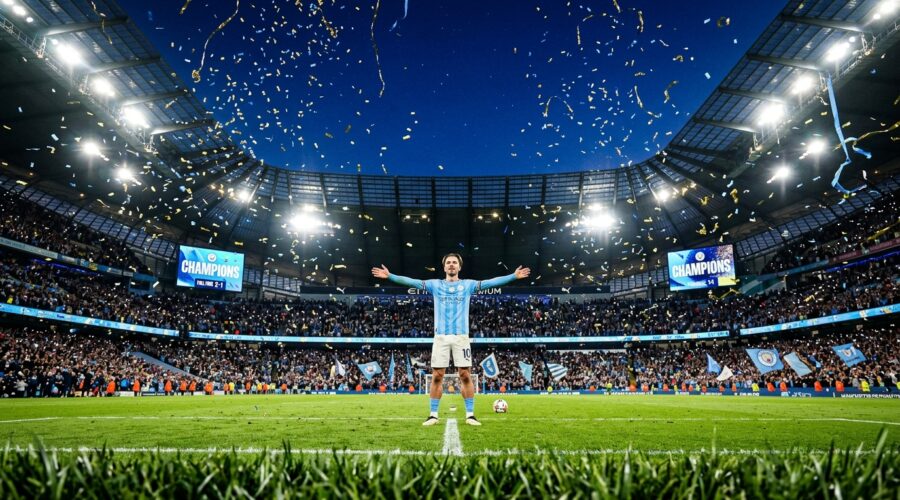
Lionel Messi scored a hat-trick. His first ever, across 26 appearances at FIFA World Cups. At 38. In his sixth tournament. Against Algeria. In Kansas City. Take as long as you need with that.
Argentina 3–0 Algeria: The Record Falls
There is a particular kind of narrative exhaustion that sets in around Messi — not because the story isn’t remarkable, but because it has demanded superlatives for so long that the language has started to buckle under the weight. And yet here we are again, reaching for new ones.
Argentina’s opening defence of their World Cup crown in Kansas City was not, for the first twenty minutes, the procession it eventually became. Algeria pressed with organisation and purpose. A VAR review chalked off Fares Chaïbi’s early goal for offside, which rather drained the colour from the contest before it had fully arrived. And then, in the 17th minute, Rodrigo De Paul slid a pass into Messi’s path, and the rest was architecture. A composed left-footed finish. His 14th World Cup goal. Not yet a record, but the mechanism was in motion.
The second, on the hour, came in the fashion that goals to centre-forwards so often do: Alexis Mac Allister’s shot cannoned back off the goalkeeper, and Messi, never having gone anywhere in particular, was simply there. His 15th.
It is worth pausing on Miroslav Klose for a moment, because the record he set across four World Cups — 16 goals accumulated with the patient efficiency of a craftsman — was always the kind of mark that seemed destined to survive. The German game, the aerial precision, the tournament-by-tournament consistency: Klose built his record the way a bricklayer builds a wall, course by course over two decades. Messi, typically, decided to match it by scoring three times in a single evening in Missouri.
The 76th minute brought the hat-trick and the record: a left-footed strike from outside the box, assisted by Nicolás González, arrowed into the corner of Luca Zidane’s goal. His 16th World Cup goal. Equal with Klose. The stadium rose. Messi was substituted three minutes later to a standing ovation. Even he, who has earned more ovations than most players earn appearances, seemed moved by it.
Klose’s record of 16 World Cup goals, set across four tournaments (2002, 2006, 2010, 2014), had stood for twelve years. It now has a co-owner: Messi, who has reached the same landmark across six World Cups. They are, as of Wednesday evening in Kansas City, joint all-time top scorers in World Cup history.
In the television studios, Thierry Henry and Zlatan Ibrahimović were reportedly left speechless. One imagines that particular silence carried its own kind of eloquence.
This is also, it should be noted, Messi’s record sixth FIFA World Cup — the first player in the history of the men’s tournament to reach that number — and he has now scored in five different World Cups, matching Cristiano Ronaldo. The Last Dance narrative, which had been circling like a polite but insistent publicist, is now fully and irreversibly activated. Whatever Argentina do from here, the tournament belongs to him already.
Austria 3–1 Jordan: Welcome Back, and Welcome to the Party
Over at Levi’s Stadium in Santa Clara, a different kind of history was being made — quieter, perhaps, but no less genuine. Austria were playing their first World Cup match since France 1998. Jordan were playing their first World Cup match ever. Between them, they had accumulated precisely zero previous meetings on this particular stage, and the occasion carried the particular electricity of football at its most uncomplicated: two teams for whom simply being there meant everything, and who were not prepared to waste the moment.
Romano Schmid opened the scoring with a thunderous strike from the edge of the penalty area in the 21st minute — Austria’s first World Cup goal in 28 years — and it was the sort of goal that deserved the occasion: top corner, full conviction, no apology. Ralf Rangnick’s Austria have a shape and a structure that rewards watching. Konrad Laimer, Marcel Sabitzer, Schmid — the system hums with pressing intensity and controlled transition, the fingerprints of a manager who treats football as a series of tactical problems to be solved rather than entertainments to be staged.
Jordan, making their historic debut, were not merely decorative. Ali Olwan — the team’s top scorer in qualifying — pulled one back in the 50th minute with a clinical finish inside the far post, and in doing so scored Jordan’s first-ever FIFA World Cup goal. The celebrations on the pitch and presumably in every living room across the country told you everything you needed to know about what that meant. A handball by Saleem Obeid, reviewed and confirmed by VAR, allowed Marko Arnautovic to convert a stoppage-time penalty and complete the 3–1 scoreline — his side’s first World Cup win since 1990 confirmed.
It was not comfortable. Jordan earned their resistance. But Group J now has two teams on three points apiece, which means Argentina and Austria will meet on June 22 in a fixture that promises to be rather more testing for both parties than their respective openers suggested.
Portugal 1–1 Congo DR: An 80% Possession Problem
There is a school of football management that believes control of the ball is, in itself, a form of control. Roberto Martínez appears to be one of its more devoted students. In Houston on Wednesday evening, his Portugal side held 80% of the possession against Congo DR, completed 461 accurate passes, and managed precisely one shot on target. Their expected goals figure was 0.07. The Democratic Republic of Congo, working with the remaining fifth of the ball, generated an xG of 0.49.
You may draw your own conclusions about the relationship between possession and danger. The numbers have drawn theirs.
João Neves opened the scoring with a powerful header from Pedro Neto’s cross in just the sixth minute, and Portugal looked, briefly, like a side about to confirm their group superiority. What followed was an 84-minute tutorial in how a determined, well-organised defensive structure can neutralise even the most technically gifted attacking unit when that unit has no convincing means of breaking it down. Congo DR — returning to the World Cup for the first time since 1974, when they competed as Zaire under circumstances that made football seem almost beside the point — sat deep, compressed space, and waited.
The 1974 Zaire story is one of the more haunting in World Cup history: players who competed under the shadow of Mobutu Sese Seko’s dictatorship, went home having conceded 14 goals, and then vanished from the tournament stage for fifty-two years. This Congo DR side, wearing bold leopard-print lapels on arrival and playing with a collective hunger that the occasion demanded, arrived with a very different story to tell.
Yoane Wissa, the Newcastle United forward, told it in the fifth minute of first-half stoppage time. Arthur Masuaku’s corner found him at close range, and his header into the top-left corner was Congo DR’s first-ever FIFA World Cup goal. The reaction was of the sort that reminds you periodically why football, at its best, transcends the tactical and the statistical and becomes something rawer and more important than either. A diaspora across the world erupted. A 52-year wait was over.
Portugal’s difficulties were compounded by Bernardo Silva — who had joined Real Madrid on a free transfer the previous day, announced on Wednesday, June 17 — being substituted at half-time after an ineffective performance. A João Cancelo overhead kick was ruled out for offside in the second half. Cristiano Ronaldo, appearing at a record-setting sixth World Cup, making him the first player ever to achieve this feat in the men’s tournament, was isolated in the final third, dropping deeper and deeper to find the ball, which suggests something about the system’s faith in its own ability to deliver it to him.
Is Ronaldo helping or hurting? It is not a new question. It has not yet received a satisfactory answer. Portugal’s next fixture may force one.
England 4–2 Croatia: Brilliant, Leaky, Promising, and Concerning — All at Once
At AT&T Stadium in Arlington, Texas — home of the NFL’s Dallas Cowboys, a venue so aggressively large that football inside it feels like a performance being staged inside an aircraft hangar — England and Croatia reproduced the Group Stage fixture from 2018 and produced something considerably more chaotic than the original. Croatia won the semi-final in Russia. England, if you are the sort of person who cares about settling scores across eight-year intervals, had a point to make.
They made several, though not always the ones Thomas Tuchel would have chosen.
Harry Kane converted a re-taken penalty in the 8th minute — the original save by Dominik Livaković was ruled out after he came off his goal line and Croatian defender Joško Gvardiol encroached into the box, two infractions prompting the referee to order a retake, and the second attempt, sent to the goalkeeper’s left, was converted with the quiet authority of a man who has been through worse — before Martin Baturina curled an equaliser past Jordan Pickford in the 36th that was, frankly, a screamer: the sort of goal that earns its scorer approximately thirty seconds of professional forgiveness for anything he might do wrong for the rest of the tournament.
Kane headed home a Declan Rice corner in the 42nd minute to restore England’s lead — his 9th World Cup goal, moving him to within one of Gary Lineker’s all-time English record of 10 — before Petar Musa scrambled an equaliser in the fifth minute of first-half stoppage time to make it 2–2 at the break. Petar Musa, it is worth noting, plays in MLS for FC Dallas. He scored a stoppage-time equaliser in a World Cup match being played approximately fifteen minutes from his own stadium. Football occasionally rewards this kind of symmetry.
The second half belonged to England, and specifically to Jude Bellingham, who received a long pass from Elliot Anderson in the 47th minute, outran Croatia’s defence — which, in fairness to Croatia’s defence, is not an easy thing to prevent — and curled a finish into the far corner with the unhurried precision of someone who has done this before. He has. At the 2022 World Cup, he scored against Iran. He was 19 then. He is 22 now, and has become only the third player in the history of the men’s World Cup to score in two different tournaments before the age of 23, joining Pelé and Michael Owen in company that requires no elaboration.
Marcus Rashford, introduced as a substitute, sealed the 4–2 in the 85th minute. England won. Thomas Tuchel will know, however, that his defensive shape remains a question begging for a concrete answer. A side that concedes twice to a Croatia depleted by age and circumstance will face stiffer examinations as the tournament progresses. Luka Modrić, who played his 199th international cap on Wednesday evening and will reach the 200-club in Croatia’s next fixture, deserved better from the occasion. He usually does.
Ghana 1–0 Panama: A Nation That Won Without Having a Shot in the First Half
And then, in the rain in Toronto, Ghana played the most Ghana-shaped match imaginable and won it in the 95th minute.
Thomas Partey, the captain, was denied entry into Canada due to pending legal charges in the United Kingdom — charges he has denied — and his absence hung over the squad’s preparation like weather. Lawrence Ati-Zigi, the goalkeeper, made a brilliant diving save from Cecilio Waterman in the second minute and was then injured at half-time and replaced by Benjamin Asare. Ghana managed zero shots in the first half. Panama had 63% of the possession and 11 attempts across the 90 minutes and came as close to their first-ever World Cup point as a side can come without actually claiming one.
Brandon Thomas-Asante came off the bench and immediately introduced precisely the kind of directness and menace that the match had been missing. His incisive run and cutback in the 95th minute found Caleb Yirenkyi at the far post, who tapped home what turned out to be the latest regulation winning goal in Ghana’s World Cup history — and, rather more pressingly, three points from a fixture that had looked, for long stretches, like it might yield nothing at all.
Carlos Queiroz, orchestrating all of this from the touchline, equalled the record for most World Cups managed as a head coach — five consecutive tournaments, across South Africa, Portugal, Iran, Iran again, Iran again once more, and now Ghana. The man has been to more World Cups than most players. Whether this constitutes wisdom or stubbornness is, perhaps, a matter of perspective.
“As a team, as a family,” said Kwasi Sibo, on playing without Partey, “we are going to give everything for him to be happy and be proud of us.” They did. He presumably was.
The State of Play: Groups J, K, and L After Matchday One
In Group J, Argentina and Austria are level on three points each — a fact that would have seemed fanciful before a ball was kicked, and which now sets up their June 22 meeting as the group’s defining fixture. Jordan and Algeria must regroup, and their June 27 head-to-head will almost certainly function as an elimination match for whichever side enters it with zero points.
Group K belongs, at this early stage, to Colombia — who defeated Uzbekistan 3–1 on the same day — while Congo DR and Portugal sit on a shared point apiece, nursing their respective frustrations. Uzbekistan are already looking upward anxiously.
Group L sees England and Ghana both on three points, a confluence that makes their June 23 meeting one of the most anticipated fixtures of the second week. Panama and Croatia, meanwhile, must win each other and hope that others above them begin to falter.
In the Golden Boot race, Messi leads with three goals from a single game. Seven players — including Harry Kane, Kylian Mbappé, Erling Haaland, and Jude Bellingham’s teammate Folarin Balogun — sit on two goals each. The tournament is seven days old. It already feels like it has lasted a decade, in the best possible way.
The Day in Summary
Day 7 of the 2026 FIFA World Cup produced the sort of afternoon and evening that makes the case for the sport without requiring any assistance from the marketing department. A footballing legend tied a record that had stood for twelve years, and did so for the first time in his 27th World Cup appearance. A nation that last attended this tournament under a dictatorship scored their first-ever goal and wept. A 22-year-old Englishman joined Pelé in a list that nobody expected to gain new members. Jordan scored their first World Cup goal in their first World Cup appearance. Austria returned after 28 years and won. Ghana won without a first-half shot in the rain in Toronto.
There were 13 goals across five matches, spread across four cities in three countries. The tournament is enormous, occasionally unwieldy, and relentlessly alive. Messi’s hat-trick will dominate every conversation for the next week, as it should. But it would be a shame to let the noise of the extraordinary drown out the genuine pleasure of the merely remarkable — the Jordan players celebrating a goal that their country will remember for decades, the Congo DR bench erupting in Houston, a late winner in wet Toronto that three million Ghanaians will watch again and again.
That is the World Cup at its best. Wide, generous, and occasionally, gloriously, beyond even its own power to predict.