There are 48 minutes of regular-season basketball left for the Indiana Fever. Forty-eight minutes to decide whether they host their first playoff series or travel to Atlanta as visitors. Forty-eight minutes for Caitlin Clark to cement one of the great individual statistical seasons in WNBA history. And 48 minutes at Target Center in Minneapolis — one of the hardest buildings in the league to win in — to prove that Tuesday night’s blowout over the league’s best team was a statement, not a fluke.
Game 2 of the Minnesota-Indiana series tips off September 24 at 8 PM ET on USA Network. It may be a regular-season finale on paper. In every other sense, it is a playoff game.
What Indiana Actually Needs — And Why It’s Harder Than It Looks
Let’s start with the math, because the seeding stakes for casual fans can get murky fast.
Indiana (27-15) currently sits as the Eastern Conference’s No. 2 seed, one and a half games behind the Atlanta Dream (29-14). The Fever’s path to stealing the East’s top seed is narrow but real: they must win Game 2 in Minneapolis, and the Atlanta Dream must drop at least one of their remaining two games against the New York Liberty.
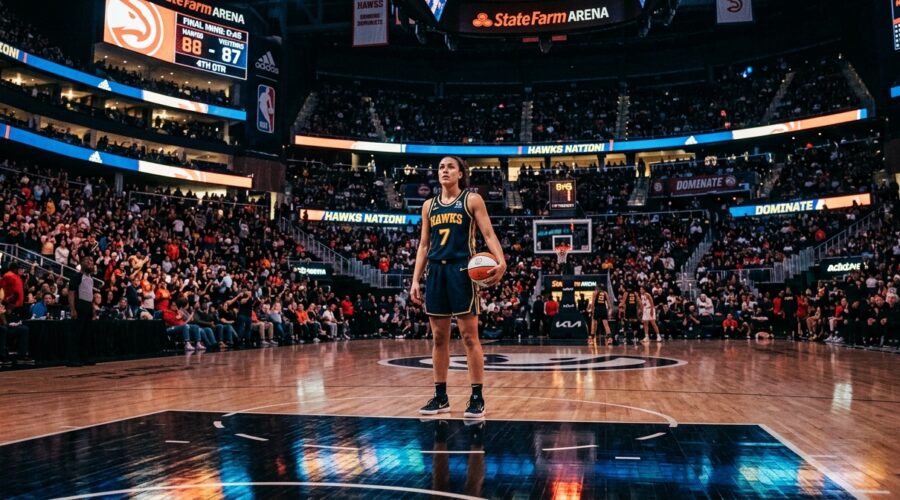
Why does any of this matter? Because the No. 1 seed in the East means home-court advantage in the first round of the playoffs. In practical terms, it flips the projected Atlanta-Indiana first-round matchup — a rematch of the 2025 postseason, which Indiana won 2-1 — from a road series to a home series. That is the difference between playing in front of a sold-out Gainbridge Fieldhouse and walking into State Farm Arena as the away team.
The Fever’s current path to the East’s top seed requires both halves of an equation they cannot fully control. After Tuesday’s 96-77 demolition of Minnesota — the league’s best team, on their own floor — Indiana did their part convincingly. Now they have to do it again, on the road, while hoping Atlanta stumbles against New York.
The Dream enter with a four-game winning streak and a New York Liberty team that ranks seventh in the East. Nothing about this is guaranteed.
The Blowout That Changed the Conversation
Context matters for Game 1’s result. Two days before Indiana dismantled Minnesota, the Washington Mystics — a respectable but far from elite team — came into Gainbridge Fieldhouse and beat the Fever 93-77. It was flat, uninspired, and the kind of loss that makes you question a team’s identity in the final week of a season.
Clark and Kelsey Mitchell combined for 47 points against Washington. Not another Indiana player reached double digits except Makayla Timpson. The offense looked like a two-person show barely staying on script.
Then came September 22 against Minnesota, and Indiana looked like a completely different team.
Clark finished with 27 points, 9 assists, 7 rebounds, and 4 steals — a near-absurd stat line against a Minnesota defense that ranks fourth in the league in defensive rating. Mitchell extended her WNBA-record streak of consecutive 20-point games to 25, adding another efficient 20 against a Lynx team that had been holding opponents well below their season averages. Aliyah Boston contributed 17 points and 7 rebounds. The Fever led wire to wire and won by 19.
The 96-77 final did not just answer questions about Indiana’s ceiling. It gave this two-game series — and Clark’s individual season — a climax worthy of everything that came before it.
Caitlin Clark, the Assist Race, and What She’s Actually Chasing
Here is the headline that will not quite happen, followed by the one that will.
Clark will not break Alyssa Thomas’s all-time single-season WNBA assists record of 357, set in 2025. That record is mathematically out of reach — Clark would need approximately 36 assists across two games to get there, a physical impossibility. Any narrative framing this as a record-breaking chase in that specific sense is overstating things.
What is happening is considerably more interesting than a simple record chase.
Clark enters Game 2 with approximately 316 assists through 37 games this season, averaging 8.5 assists per game — neck-and-neck with Alyssa Thomas for the league lead. With two games remaining, she projects to finish somewhere between 336 and 338 assists. That would represent her own personal-best season, eclipsing the 337 she posted as a rookie in 2024 — a total that tied Thomas’s then-existing record rather than breaking new ground outright. For context on where a 336–338 finish would land in the all-time books: Thomas now holds the top two single-season assist records with 357 (2025) and 337 (2024), so Clark would be competing for a spot just outside that top tier.
More pointedly: the APG title is still on the table. Thomas, playing for the Phoenix Mercury, also has roughly two games remaining, also averaging 8.5 APG. The assists-per-game crown for the 2026 season will be decided in real time over the next 72 hours, and neither player has a meaningful edge heading in.
And then there is the larger picture — the one that requires stepping back from the final week entirely.
Clark is 24 years old. She has 768 career assists through just three professional seasons. She became the fastest player in WNBA history to reach 500 career assists, doing so in 59 games — compared to Sue Bird’s 82. She holds the all-time WNBA record for career games with 20 or more points and 10 or more assists, with 12. On July 17, she became the first player in league history to post a 40-point, 10-assist game, going for 45 and 10 against Seattle. Sue Bird’s all-time career assists record of 3,234 is an enormous distance away. It is also, for the first time in WNBA history, a record that a player in their mid-twenties might plausibly be on pace to challenge.
That is not a game-preview talking point. That is the slow-burning storyline beneath every box score Clark generates.
Clark’s 2026 Season in Full
For anyone who has been following Clark only casually through this regular season, the full scope of what she has done in 2026 deserves enumeration.
- 45 points and 10 assists on July 17 vs. Seattle: The first 40-10 game in WNBA history.
- Fastest to 500 career assists (59 games): Sue Bird reached the same mark in 82 games.
- 12 career games with 20+ points and 10+ assists: Her own WNBA record, one no other player is within range of approaching.
- 4th career triple-double on July 31 at Portland: Tied for third-most in WNBA history, alongside Sabrina Ionescu. The all-time leaders are Alyssa Thomas (28) and Jessica Shepard (6).
- Career-high 8 three-pointers on August 23 at Chicago: 37 points, 10 assists.
- A career-best 45.6% field goal percentage: Compared to 41.7% in her rookie year, representing meaningful growth as a scorer and decision-maker.
In a season where she ranks third in the league in scoring (22.7 PPG) and second in assists (8.4 APG, just behind Alyssa Thomas’s league-leading 8.5), Clark has done something even harder to quantify: she has made Indiana the most explosive offensive team in the entire WNBA. The Fever lead the league in offensive rating (116.4) and points per game (97.1). That production runs through her.
Her assist network is meticulous in its design. She has connected with Kelsey Mitchell for 93 assists this season — primarily off Mitchell’s cuts and drive-and-kick sequences — and fed Aliyah Boston for 88 more, most of them interior finishes and short-roll catches that Boston converts at a high rate. Together, those two connections account for roughly 57% of Clark’s season assist total, a reflection of how deliberately Indiana has built its offense around spacing Clark’s creation toward the two best finishers on the roster.
Kelsey Mitchell’s Streak and What It Means for Game 2
There is a companion individual narrative to Clark’s assists chase that deserves its own space: Kelsey Mitchell has scored 20 or more points in 25 consecutive games — surpassing A’ja Wilson’s previous record of 20 consecutive games. That is not just a personal streak — it is the longest such streak in WNBA history, a mark Mitchell set and has continued to extend throughout the final month of the regular season.
On September 18, in Toronto, Mitchell became the highest single-season scorer in Indiana Fever franchise history, finishing with 1,034 points to surpass A’ja Wilson’s single-season WNBA record of 1,021 points set in 2024. She now averages 25.0 points per game, second in the league only to Wilson’s 26.0.
Game 2 at Target Center, against a Minnesota defense ranking fourth in the league, is the next obstacle in her path. The Lynx held Mitchell to 20 points in Game 1 — technically enough to extend the streak, but an efficiency floor rather than a ceiling. The question entering Thursday night is whether Minnesota’s adjustment, presumably with more defensive attention directed at Mitchell, will create openings for Clark to exploit, or whether the Lynx can contain both simultaneously.
Minnesota’s answer in Game 1 was that they could not. The question is whether that remains true on the road.
Minnesota’s Stakes — And the Olivia Miles Question
The Lynx (32-11) have already done most of what they needed to do this season. They hold the overall No. 1 seed with a 3-1 season-series tiebreaker over the Golden State Valkyries. They have the league’s best road record (14-7) and are 18-4 at home in 2026. They are, by almost every measure, the best team in the WNBA this year.
What they have not been able to do in either game of this two-game set is be fully themselves, and that is almost entirely because of one player.
Olivia Miles — the leading candidate for Rookie of the Year at 19.8 points and 6.0 assists per game — entered Game 1 as questionable with a left calf injury and was limited throughout. The Lynx’s offense is a different organism when Miles is healthy and operating at full capacity. Her injury is the most significant health storyline of the series and arguably of the entire WNBA final week.
For Minnesota, the goal is simultaneously modest and crucial: get Miles healthy enough to play meaningful minutes in Game 2, use a home-court win to build momentum heading into the playoffs, and keep Napheesa Collier — who was held to just 13 minutes and 9 points in Game 1 after returning from a 301-day injury absence — on a managed load that gets her playoff-ready without risking a setback.
Collier, averaging 18.1 points and 7.2 rebounds per game across her games since returning on July 22, 2026, represents the Lynx’s championship upside. How healthy she is when the postseason begins matters more to Minnesota than any single regular-season result. Game 2 is as much a preview of what the Lynx could be in October as it is a competitive game with seeding implications for their opponent.
The Road Test Indiana Has Not Passed Yet
Indiana’s 13-8 road record is solid by WNBA standards. It is not the Fever’s natural environment. Target Center in Minneapolis, where the Lynx are 18-4 this season, is not a forgiving venue — and the Fever know it firsthand. When these teams met there on August 2, Minnesota won 108-100 in a game that was not quite as close as the final score suggests. Mitchell scored 37 points, Clark had 10 assists, and Minnesota’s depth and crowd proved decisive in the fourth quarter.
The Fever have gotten better since August. The question for Game 2 is whether the 19-point win in Indianapolis was a true reflection of the gap between these teams in late September, or whether home court was doing more work than the box score revealed.
Minnesota will make adjustments. They will be at full preparation in their own building. And their fans — who have watched a team with legitimate championship aspirations navigate an injury-disrupted season — will arrive at Target Center ready to send their team into the playoffs on a win.
Indiana does not have the luxury of playing comfortably in that environment. They will have to take the East No. 1 seed. Nobody will hand it to them.
Meanwhile, in Atlanta
While Clark and Mitchell are working through their final 24 hours of regular-season basketball preparation, there is a parallel drama unfolding elsewhere that Indiana can only watch.
The Atlanta Dream (29-14, on a four-game winning streak) close out against the New York Liberty on September 21 and September 23. For Indiana’s path to the East’s top seed to fully open, Atlanta must lose at least one of those games. The Liberty (24-16, .600) still have Breanna Stewart (20.8 PPG) and Jonquel Jones (9.0 RPG) and are capable of winning games against anyone — but they are not a team currently playing their best basketball, sitting on a one-game losing streak heading into the series.
During Game 2 at Target Center on Thursday night, Indiana players, coaches, and every Fever fan with a second screen will be tracking the Atlanta score in real time. If the Dream split with New York heading into Thursday, a Fever win in Minneapolis clinches the East’s No. 1 seed and home-court advantage in the first round of the playoffs. If Atlanta sweeps, Indiana’s seeding battle becomes academic regardless of the Game 2 result.
This is the WNBA in its 30th season — multiple storylines running concurrently, every game carrying compounding weight, scores from other arenas reshaping the stakes of the one in front of you.
The 30th Season and What It All Means
It is worth pausing, before Game 2 tips off, to appreciate the moment the WNBA is living in right now. The league’s 30th season features a record 216 nationally televised games across ESPN, NBC, CBS, Prime Video, and multiple other partners. The league reports 3.8 billion minutes viewed before the All-Star break. Nearly 50% more games this season drew audiences of one million viewers or more compared to the prior year.
This is not background noise. This is the context in which Caitlin Clark is writing her statistical season, in which Kelsey Mitchell is setting franchise scoring records, in which Olivia Miles is following directly in the path Clark cleared two years ago as the most anticipated rookie in league history. Every number has a larger audience to land in front of than it would have had even three years ago.
Clark, for her part, has been the league’s most electrifying and most watched player since the moment she arrived. Her 45-point, 10-assist game in July became one of the most-shared sporting moments of 2026. Her assists records, her shooting efficiency improvements, and the sheer variety of ways she can dismantle a defense have given the league a singular storyline that carries casual fans deeper into the sport than they might otherwise go.
What she has built in three seasons — 768 career assists, the fastest to 500 in league history, a career field goal percentage that has improved every season — is a foundation for a career that could, if she stays healthy and continues her development, eventually threaten the records currently considered untouchable.
Sue Bird’s 3,234 career assists took 21 seasons to accumulate. The math at this point in Clark’s career is genuinely staggering — and what she does with the next decade-plus of evenings like this is the real record chase hiding underneath all of this week’s seeding drama.
What to Watch Thursday Night
For viewers tuning in to USA Network at 8 PM ET, here is exactly what is at stake in real time:
- Caitlin Clark’s assist total: Every dime she dishes moves her closer to finishing with a historic single-season assists total. A strong game could lock up the APG title over Alyssa Thomas.
- Mitchell’s 26th consecutive 20-point game: One of the most remarkable individual streaks in the league’s 30-year history, being extended in one of the league’s toughest defensive environments.
- Olivia Miles’s health and minutes: If Miles is healthy, Minnesota is a different team. If she is limited again, Indiana’s offensive attack — already the best in the league — will find its openings.
- Napheesa Collier’s role: A fully engaged Collier gives Minnesota a playoff preview matchup against Boston that could carry stakes well beyond this week.
- The Atlanta score: The Dream-Liberty result will scroll across the bottom of every sports app in Indianapolis and Minneapolis simultaneously. Context arrives in real time.
- Indiana’s road identity: This is the genuine unknown. The Fever were humiliated at home by Washington two days before beating Minnesota by 19. Which version shows up in Minneapolis?
The Larger Truth About This Two-Game Series
Whatever happens Thursday night, this two-game series has already revealed something important about Indiana. A team that appeared rudderless after the Washington loss on September 20 walked into a stadium and dismantled the league’s best team by 19 points two days later. That kind of turnaround is not accidental. It reflects an offensive system that, when functioning at its peak, is not just good — it is the best in the WNBA by the numbers that matter most.
Clark’s 9 assists against Minnesota’s fourth-ranked defense on Tuesday night were not volume passing in a garbage-time blowout. They were precision reads against elite switching schemes, finding Mitchell in rhythm and Boston in space against a team that had prepared specifically for how Indiana attacks. The number reflects the quality of the decisions, not just the quantity.
That is what makes these final 48 minutes worth watching for reasons that extend beyond seeding and statistics. This is a 24-year-old player, in her third professional season, operating at a level of offensive intelligence that the WNBA has not previously seen from a guard of her profile. She will not break Thomas’s all-time single-season assists record this week. She does not need to. She is building something that will outlast any single season’s counting stats.
The record she is actually chasing — the one that will define her career legacy — will not be broken in September 2026. It is the one that requires another 15 years of evenings like this.
For now, there is one more game left. One more building to win in. One more chance to take something that no one has offered Indiana — they will have to earn it, on the road, against the best team in the league, in the final game of the regular season.
Forty-eight minutes. Everything on the table. This is the WNBA in its 30th season, and it has never looked quite like this before.